Skip to content
Top-rated outdoor gear, ranked

Best Of 2026

Best Climbing Belay Devices of 2026

Our top 10 picks, independently ranked. Budget to premium.

A belay device is the single most safety-critical piece of gear most climbers will ever buy, and the market in 2026 splits cleanly into two families: simple passive tube-style devices that rely entirely on your brake hand, and assisted-braking devices (ABDs) that add a camming or pinching mechanism to help hold a fall. Neither family is universally "better", a gym sport climber working redpoints wants the holding power and easy hangs of an assisted device, while a trad leader heading up a long alpine route often prefers a featherweight tube that can rappel double ropes and belay a second directly off the anchor.

The good news is that the category has matured. Petzl's GriGri remains the reference point it has been for two decades, but it now shares the assisted-braking shelf with genuinely excellent rivals like the Edelrid Pinch, the lead-feeding-focused Petzl Neox, and budget heroes like the Mammut Smart 2.0 that deliver real assisted braking for under fifty dollars. On the passive side, Black Diamond's ATC line is so refined and inexpensive that nearly every trad and multi-pitch climber owns at least one.

This guide spans that whole spectrum on purpose. We've ranked ten devices people actually buy in 2026, from a $25 tube to a $200 mechanical device, so you can see where your money goes as you move up, and, just as importantly, where spending more buys you nothing you need. Whatever you choose, remember the rule every device maker prints on the package: no device replaces attentive technique and a hand that never leaves the brake strand.

At a glance

#ProductPrice
1$105–$120
2
Smart 2.0

Mammut

$35–$50
3
Neox

Petzl

$140–$150
4
Pinch

Edelrid

$115–$125
5
ATC-Guide

Black Diamond

$30–$37
6
ATC Pilot

Black Diamond

$40–$50
7
Giga Jul

Edelrid

$90–$110
8
Mega Jul

Edelrid

$45–$60
9
Revo

Wild Country

$145–$200
10
ATC-XP

Black Diamond

$22–$28
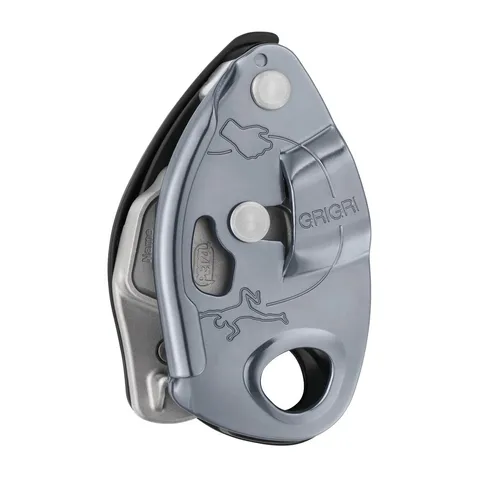
GriGri (2019)
Best OverallMid-range

1. GriGri (2019)

Petzl

$105–$120

The two-decade industry reference for assisted-braking belay, with the smoothest lowering and most predictable catch of any cam-style device. If you buy one device for gym and sport climbing, this is it.

Best for: Gym and sport climbers who want one dependable do-everything single-rope device

Proven, intuitive assisted-braking catch · Exceptionally smooth, controllable lowering · Durable enough for thousands of pitches

Single-rope only (no rappel on two strands) · Feeding slack fast takes practice

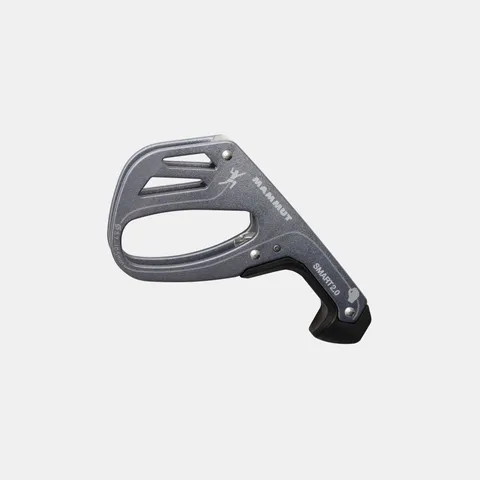
Smart 2.0
Best ValueBudget

2. Smart 2.0

Mammut

$35–$50

Real assisted braking for roughly a third of the price of a GriGri. The geometry-based locking has no moving cam to wear out, making it the smartest first ABD purchase on the market.

Best for: New climbers or anyone wanting assisted braking without the premium price

Genuine assisted braking at a budget price · Light and nearly maintenance-free (no moving cam) · Smooth slack feeding once learned

Lowering is less refined than a GriGri · Narrower rope-diameter sweet spot

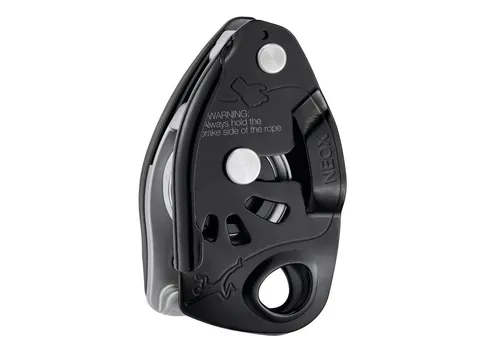
Neox
Best PremiumPremium

3. Neox

Petzl

$140–$150

Petzl's flywheel-based assisted device feeds slack with almost no drag, making it the best in class for paying out rope to a fast-clipping lead climber. A specialist's tool that justifies its price for lead-focused belayers.

Best for: Sport and lead climbers who feed lots of slack and want the best paying-out experience

Unmatched, friction-free slack feeding · Assisted braking with no panic-grab tendency · Smooth, well-controlled lowering

Expensive · Heavier and more specialized than a GriGri · Overkill for casual top-rope use

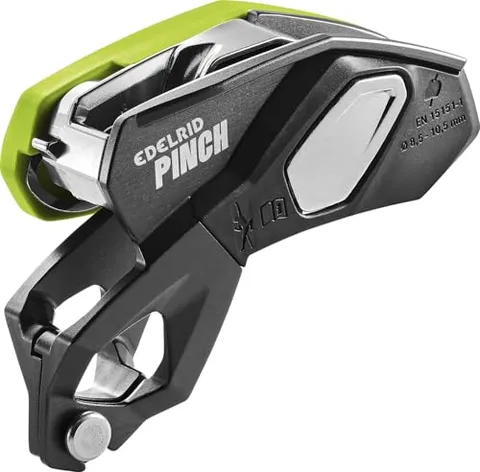
Pinch
Editor's PickMid-range

4. Pinch

Edelrid

$115–$125

The most credible GriGri challenger in years: a fixed pinch-loop design that stays put while feeding slack and is the first device engineered to work equally well for left- and right-handed belayers.

Best for: Climbers wanting a modern GriGri alternative, especially left-handed belayers

Excellent, snag-free slack feeding · Works equally well left- or right-handed · Compact and well-built

Priced like a GriGri+ without the wider name recognition · Single-rope only

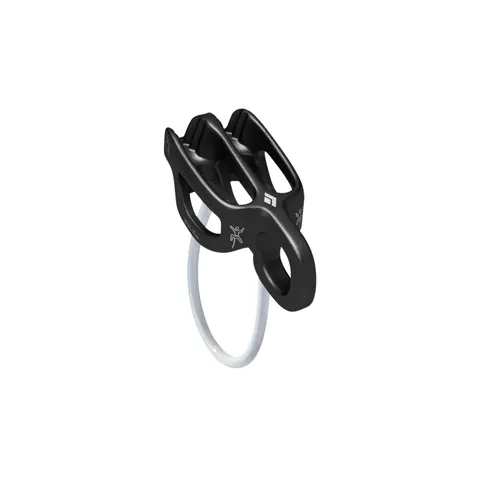
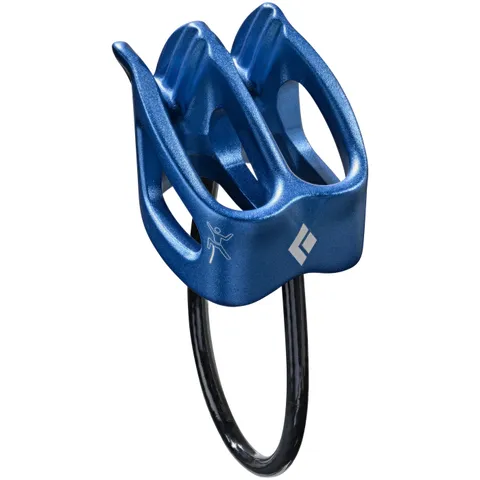
ATC-Guide
Budget

5. ATC-Guide

Black Diamond

$30–$37

The default passive tube for multi-pitch and trad. Guide mode lets you belay one or two seconds directly off the anchor, and it rappels two strands, all at a featherweight, low price.

Best for: Trad and multi-pitch climbers who need a versatile, lightweight tube

Guide mode for belaying seconds off the anchor · Handles double-rope rappels · Light, cheap, and bombproof

No assisted braking when lead belaying · Lowering a second from guide mode takes technique

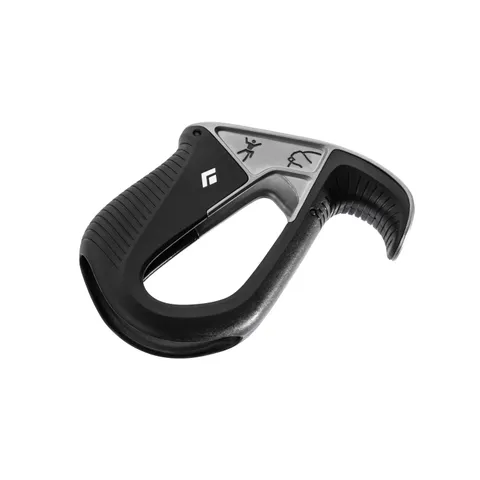
ATC Pilot
Budget

6. ATC Pilot

Black Diamond

$40–$50

Black Diamond's affordable assisted-braking device with no moving cam, a sport-belay alternative to the Smart 2.0 for climbers who prefer the BD ecosystem and a slimmer price.

Best for: Budget-minded sport and gym climbers wanting assisted braking

Assisted braking at a low price · Simple, durable, geometry-based locking · Compact and light

Single-rope only, no rappel or guide mode · Narrow rope-diameter range

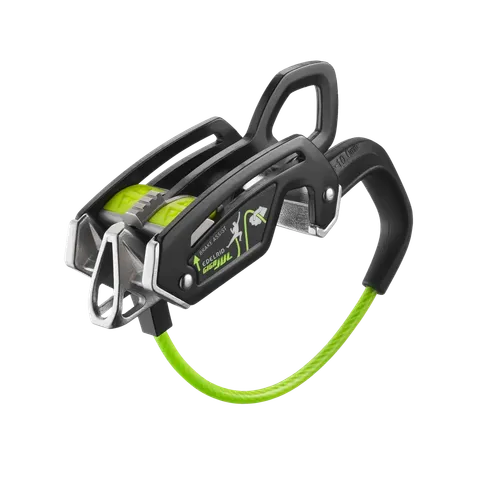
Giga Jul
Mid-range

7. Giga Jul

Edelrid

$90–$110

A genuine do-it-all device that switches between an assisted-braking mode for single-pitch belaying and a manual tube mode for smooth double-rope rappels, uniquely versatile for climbers who do everything.

Best for: All-around climbers who want one device for sport days and alpine rappels alike

Switchable assisted and manual tube modes · Guide mode plus two-strand rappel · One device covers sport, trad, and multi-pitch

Mode switching has a learning curve · Heavier and pricier than a plain tube

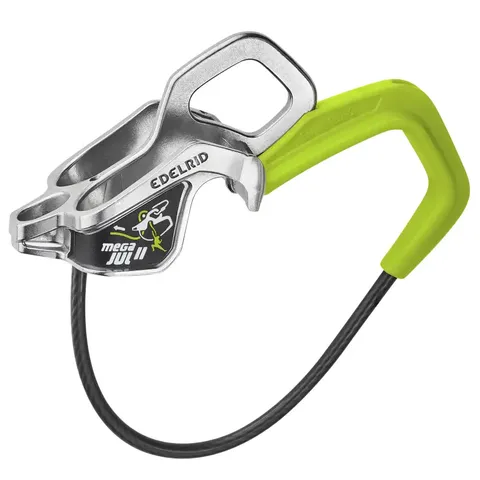
Mega Jul
Budget

8. Mega Jul

Edelrid

$45–$60

A tiny stainless-steel tube with built-in assisted braking and guide mode, one of the lightest assisted devices made, beloved by weight-counting alpine and multi-pitch climbers.

Best for: Weight-conscious alpine and multi-pitch climbers wanting assisted braking

Extremely light assisted-braking tube · Guide mode and two-strand rappel · Stainless steel resists wear

Feeding slack and lowering can be grabby/stiff · Best on skinnier ropes; needs practice

Revo
Premium

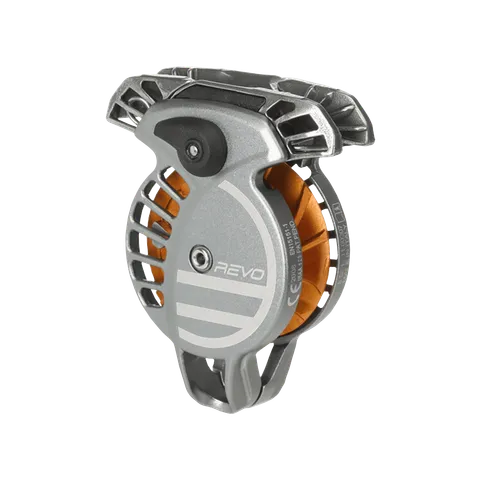
9. Revo

Wild Country

$145–$200

An inertia-reel device that feeds rope freely in both directions and locks only on a fast pull, with no panic-mode failure point. A premium choice for belayers who prize redundancy and a forgiving, mistake-tolerant feel.

Best for: Climbers who want a forgiving, redundant assisted device and don't mind the weight

Bi-directional feeding with no defined orientation · Inertia lock with no panic-grab failure mode · Smooth, intuitive for newer belayers

Heavy and the most expensive here · Single-rope only, no guide mode

ATC-XP
Best BudgetBudget

10. ATC-XP

Black Diamond

$22–$28

The no-frills passive tube that has belayed and rappelled millions of pitches. With high-friction grooves for skinny ropes and a rock-bottom price, it's the cheapest competent device any climber can own.

Best for: Beginners, backups, and rappel kits where simplicity and price win

Dirt cheap and nearly indestructible · High-friction mode for thin ropes · Light and simple, handles two-strand rappels

No assisted braking whatsoever · No guide/auto-block mode

How we choose

We ranked these devices by overall recommendation for a typical climber who does a mix of gym, sport, and trad: weighing braking security, smoothness of lowering and slack-feeding, rope-diameter range, weight, durability, and price-to-performance, not just sticker price. The three tiers describe what you pay and what you get: budget (roughly $25–$60) covers passive tubes and the simplest assisted devices that do the core job reliably; mid (roughly $90–$130) covers full-featured assisted-braking devices like the GriGri and Pinch that most single-pitch climbers will live on; and premium (roughly $140–$200) covers specialized or mechanically sophisticated devices whose extra cost buys a specific advantage (lead feeding, redundancy, versatility) rather than baseline safety. We are an independent editorial guide: we accept no payment from manufacturers for placement, rankings reflect our own assessment cross-checked against published lab and field reviews, and affiliate links, if you use them, never change a product's position.

Common questions

For gym and sport climbing, an assisted-braking device (ABD) like the GriGri, Pinch, or Mammut Smart 2.0 is the modern default, the extra holding power matters when you're catching repeated falls or holding a climber who's hanging to work moves. A passive tube (ATC-style) is still the standard for multi-pitch and trad because it handles double-rope rappels and belaying a second directly off the anchor, and it's lighter and cheaper. Many climbers own both. No device is hands-free: every one of these requires your brake hand on the rope at all times.

Always match the device to the rope. Most assisted devices have a fairly narrow window, the GriGri is rated roughly 8.5–11mm (optimized ~8.9–10.5mm), and the Mammut Smart 2.0 and Edelrid Pinch have similar single-rope ranges. Passive tubes like the ATC-XP and ATC-Guide accept a wider band and take two strands for rappelling. Skinny modern ropes (sub-9mm) feed faster and brake with less friction, so check both the device's and the rope's stated ranges before you buy.

Both are mechanical assisted-braking devices from Petzl. The GriGri uses a camming mechanism and is the proven all-rounder for sport and gym belaying with smooth, controllable lowering. The Neox uses an inertia-reel-style flywheel designed to pay out slack with almost no resistance, its standout strength is feeding a lead climber fast, but it's pricier and more specialized. For a first or only device, the GriGri is the safer all-purpose pick; the Neox is for lead-focused climbers who feed a lot of slack quickly.

Only if you need what it does. A $35 Mammut Smart 2.0 provides genuine assisted braking that is plenty safe for everyday sport and gym use. Premium devices like the Neox (better lead feeding) or Wild Country Revo (a redundant locking mechanism with no panic-mode failure) solve specific problems. If those problems aren't yours, you're paying for capability you won't use, spend the difference on a rope or more quickdraws.

A tube-style device with guide-mode (auto-block) capability, like the Black Diamond ATC-Guide or Edelrid's Jul-series, is the classic answer. Guide mode lets you belay one or two seconds directly off the anchor with assisted locking, it handles two-strand rappels, and it's light enough that you won't notice it on a long day. The Edelrid Giga Jul is a notable do-it-all option because it switches between an assisted-braking mode and a manual tube mode for rappelling.

Most are symmetrical and work either way, but mechanical assisted devices have a defined brake-strand side that can feel awkward if you belay left-handed. The Edelrid Pinch was specifically engineered to work equally well for left- and right-handed belayers, which is part of why it's drawn attention as a GriGri alternative. If you're left-handed, it's worth handling a few devices in a shop before committing.

Some links are affiliate links, and we may earn a commission at no extra cost to you. It never affects our rankings.

In your pocket

Take every crag with you.

Free, no account needed. Crag maps, public-land boundaries, and your climbing log in your pocket.

  • Every gym, guide, and crag in your pocket

  • Public-land boundaries under every approach

  • File a safety plan for every remote wall

  • GPS tracking that keeps recording at the end of the approach

The Climb Hubs app dashboard

For operators

Run your climbing business?
Launch your branded surface.

Get your own branded surface in the Climb Hubs app and a directory listing in minutes. Bookings, digital waivers, and your whole operation live in one cockpit.