Most "best crags for beginners" lists are really lists of famous crags. Fame and beginner-friendliness are close to unrelated, and a few of the most-recommended areas in America are among the worst places to take a gym climber.
So this article uses one blunt test: how many bolted sport routes does the area actually have between 5.6 and 5.9? Not how good it is. Not how famous. How much easy, bolted rock is there for you to climb.
The answer varies more than you'd believe.
The Numbers
Counts of sport routes graded 5.6–5.9, against everything at 5.10a and above:
| Area | Sport 5.6–5.9 | Sport 5.10a+ | Verdict |
|---|---|---|---|
| Shelf Road, CO | 276 | 971 | The real answer |
| Smith Rock, OR | 132 | 449 | Excellent, with caveats |
| New River Gorge, WV | 39 | 507 | A trap for beginners |
That New River line is not a typo. Thirty-nine beginner sport routes in the entire gorge, against 507 at 5.10 and up, and its moderates are overwhelmingly trad (about 176 of them). The New is a magnificent, stiff, hard, technical area, and it is routinely and wrongly sold to first-timers as a beginner sport destination. It isn't one.
Shelf Road, Colorado: Go Here
Near Cañon City, and the honest answer to "where should I learn to clip bolts outside."
Several hundred moderate sport routes, which is roughly seven times the New River Gorge's beginner sport inventory. The moderates cluster at The Bank (the best wall in America for a first outdoor lead), Cactus Cliff, Sand Gulch, and the Far Side of The Gallery.
Know what the rock is like. It's vertical limestone: technical, pockety face climbing, not the overhanging jug-hauling some guides imply. The edges are notoriously sharp (bring hand salve), and the popular moderates at The Bank and Cactus Cliff are polished from decades of traffic. Expect to work your feet.
Practicalities: BLM land. No day-use fee and no permit for individual climbers. Camping at Sand Gulch and The Bank is $20 a night ($40 for a group site), and both are open year-round.
Season: this is the counterintuitive one, Shelf is a winter and shoulder-season crag. Peak is roughly November through early May. Summer is the off-season: it's the high desert and the rock bakes. And note the crags sit at 6,600–7,000 feet, low for Colorado, but not low.
Colorado Springs is 45 minutes away, and several guide services work Shelf specifically to teach sport leading.
Smith Rock, Oregon: Excellent, But Read This First
The birthplace of American sport climbing, and it has 132 moderate sport routes, a genuinely good stock.
Three things the brochures skip:
The grades are stiff. Smith was graded in a hard era and never recalibrated.
The first bolts are high. Commonly 15 to 20 feet off the ground. A stick clip isn't optional here, it's standard practice, and without one you're soloing the first section of a lot of routes.
The approach is not "mellow." The main access is the Chute Trail, rated most difficult by the park's own trail guide and known locally as "The Grunt": a steep, scree-surfaced descent into the Crooked River canyon that you have to climb back out of at the end of the day, tired. Crags out at Monkey Face and the Marsupials add 20–30 minutes and real elevation on top.
Season: spring (April–June) and fall (September–November). Summer is genuinely dangerous, routinely over 100°F, with no shade on the exposed switchbacks.
And Smith has serious standing closures, the only area on this list that does. Golden eagle and falcon nesting closes the Monument from 10 January to 31 July, and closes the Smith Rock Group above 100 feet, plus First Kiss, from mid-March. Check the park's current closure list before you go, or you may walk an hour to a wall you can't climb.
Costs: day-use parking is $10 (Oregon resident) / $12 (non-resident) per vehicle, it doubled at the start of 2026. The Bivy campground is $12–15 per person per night, walk-in only.
The rock is welded tuff, soft enough that the fixed hardware is an ongoing maintenance project, over a thousand bolts have been replaced in recent years. Inspect what you clip.
New River Gorge, West Virginia: Beautiful, and Not For Your First Trip
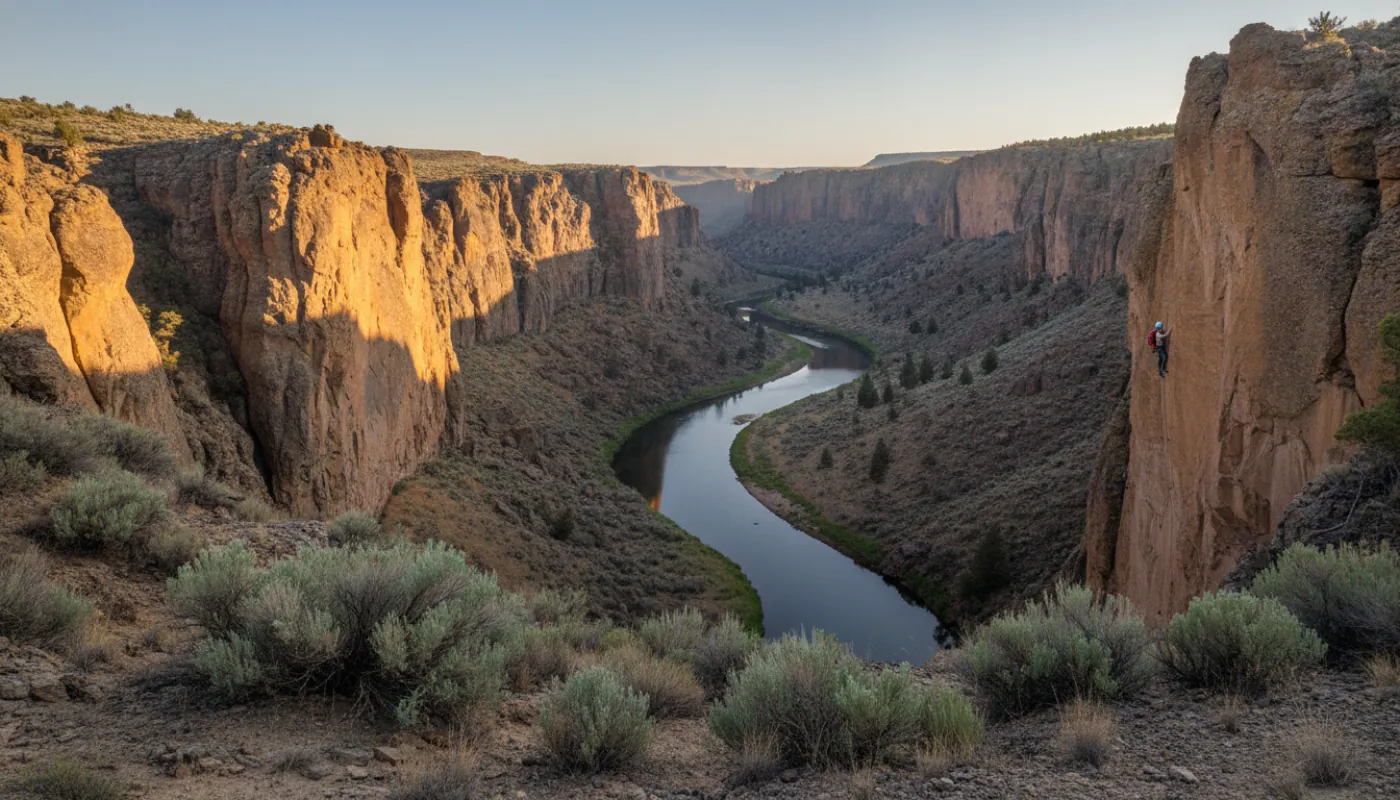
It's free (no entrance fee, no climbing permit, free first-come camping), the stewardship is superb, and the Nuttall sandstone (about 98% quartz, harder than granite), gives some of the best rock texture in the country.
But the moderates are trad, and the sport is hard. If you're going as a new sport climber, your options are concentrated in a handful of places: Sandstonia and Beer Wall at Bubba City, Cotton Club at Cotton Hill, and Kaymoor Slabs. Endless Wall and Beauty Mountain are not beginner crags, the guidance for Endless is essentially "be solid on 5.10 trad and 5.11 sport."
(The region's best moderate sport is actually at Summersville Lake, about 40 minutes away, but that's Army Corps land, outside the national park.)
Check closures before you go. Several areas are currently closed to all climbing, including both sides of Meadow River and Dogwood Cave, and the local coalition maintains voluntary closures around peregrine falcon nesting and hacking sites. There's no fixed annual raptor calendar here, so check the current alerts rather than assuming.
Season: late April to mid-June, and mid-September to late October. Summer is humid and buggy rather than dangerous.
Red River Gorge, Kentucky: The Best All-Rounder
The Red is the most popular sport-climbing destination in America, and on the numbers it earns its place: around 200 sport routes at 5.5–5.8, soft grades by national standards, and short approaches.
But go to the right part of it. The Red is overwhelmingly a hard sport venue, roughly 890 routes at 5.12 and above, and the beginner density is concentrated in specific places. Muir Valley and Miller Fork are where the moderates actually are. The Northern Gorge classics that everyone name-drops (Military Wall, Left Flank) have almost no sub-5.9 sport between them.
And know the access rules before you drive, because "just turn up" doesn't work here:
- Muir Valley, the densest beginner terrain, requires a signed waiver and charges $15 per vehicle per day to park.
- RRGCC land (the PMRP, Miller Fork, Bald Rock) requires a signed online waiver, but no fee.
- Roadside Crag / Graining Fork is limited-access: a per-person daily permit arranged in advance.
- Only the Daniel Boone National Forest crags are genuinely walk-up.
Check current closures too, The Zoo has been closed indefinitely since early 2025.
One myth to bin: you'll be told never to climb Red River sandstone when it's wet. That rule belongs to the desert, the soft Wingate and Navajo sandstone of Utah, where wet holds genuinely snap. The Red's Corbin sandstone is well cemented, and the Red is famously a rainy-day destination. Wet rock there is a friction and comfort problem, not a rock-destruction one.
Rumbling Bald, North Carolina
Near Asheville, and worth knowing exactly what it is: a bouldering and trad area. There are no bolted sport routes to clip.
Great for beginner bouldering. Not for beginner roped climbing, and here's the catch most write-ups miss: setting up a top-rope here means building trad anchors, which is not a beginner skill. The moderate roped lines are trad, stiff, and often runout. Go to boulder, or go with a guide.
Practicalities: a free climbing permit is mandatory and must be self-issued at the trailhead kiosk every visit. Access is gated to day-use hours, only the South side is open to climbing, there's no camping, and the lot routinely fills by 10 a.m. at weekends. It is popular, not secluded.
The Grade Fact That Changes Your Trip
Here's a correction to advice you'll see everywhere, including in the previous version of this article:
Outdoor grades are not "soft" compared to the gym. They are STIFF.
Gym grades run generous. Moving outside, expect to drop half a grade to a full grade, sometimes more. If you climb 5.10 in the gym, plan your first outdoor trip around 5.8s, and don't be surprised when they feel like work.
Nobody has ever regretted starting too easy outdoors. Plenty of people have regretted the opposite.
Preparation
Get comfortable, not strong. Move smoothly on gym 5.7 and 5.8 without pumping out. That's the readiness bar, not a number.
Learn the knots on a rope, in your hands: the figure-eight follow-through you'll tie in with, and a stopper knot for the end of the rope.
Own your belay device before you leave home. Not borrowed at the crag. And your brake hand never leaves the brake strand, not even with a GriGri.
Bring a helmet. Wear it belaying too.
Close the system. A knot in the free end of the rope, every time.
Hire a Guide for Your First Day
This is the best money in climbing, and it's the whole reason a good beginner destination has good guide services.
What it actually costs in 2026: a full private day, one guide to one climber, runs about $400–525, with cheaper regions nearer $240 and premium areas past $600. Two climbers sharing a guide pay roughly $265–345 each. A larger group class through a resort or school can come in near $150 a head.
Anything dramatically below that band should prompt a question, because a legitimate guide is paying for certification, insurance, and a land-manager permit.
What you get for it is the thing you cannot get from an article: someone watching you clean an anchor for the first time, on the ground, before you have to do it forty metres up.