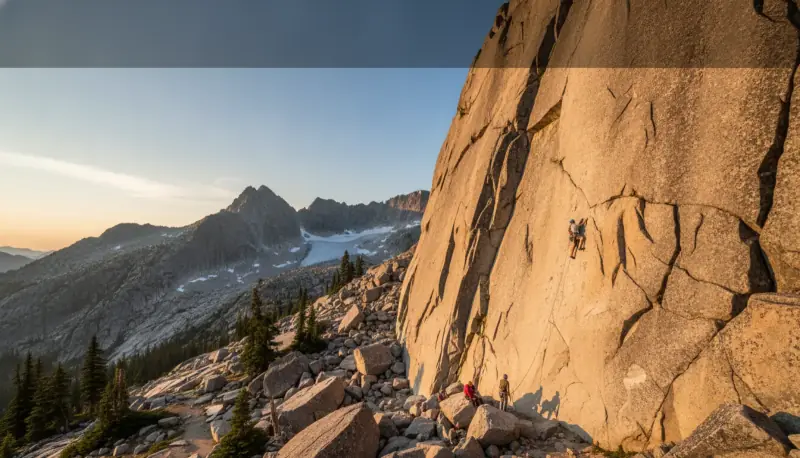
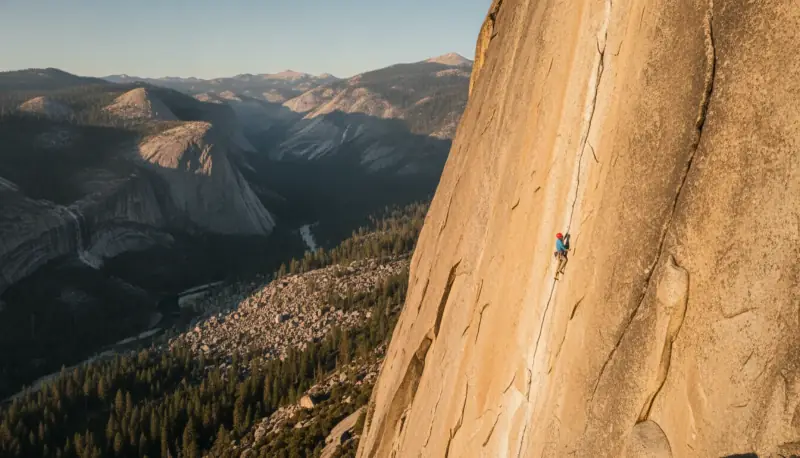
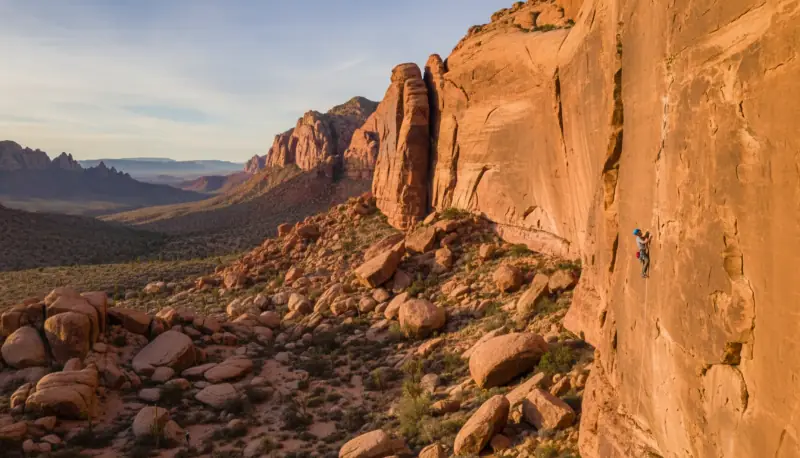
You can climb 5.11 in the gym and die on a 5.7 outside.
That isn't a scare line. It's the shape of the accident data. The gym-to-crag transition hurts and kills people, and it almost never does it on the climbing. It does it at the anchor, on the descent, and in the ninety seconds when a climber and a belayer had different ideas about what was about to happen.
The physical skill transfers. The systems do not. This article is about the systems.
Read this, then go take a course or find a mentor. An article cannot teach you to clean an anchor. It can tell you what you don't know yet, and which parts will kill you if you improvise them. That is all this is for.
The Thing That Actually Kills Gym Climbers
Strong, careful, experienced climbers deck from the tops of single-pitch sport routes every year, and the pattern is remarkably consistent.
More than half of all lowering accidents recorded over the past decade happened because the end of the rope passed through the belay device. The rope simply ran out. The end whipped through, and the climber fell the rest of the way.
The fix is a knot.
CLOSE THE SYSTEM. Tie a bulky stopper knot in the free end of the rope, or tie the end into the rope bag, before anyone leaves the ground. This single habit prevents the most common way climbers die at a sport crag. It costs five seconds.
And know how long the route is versus how long your rope is. A 60 m rope will not lower a climber from a 35 m anchor. There are popular crags where a 70 m rope is now mandatory to lower safely, and the textbook accident is exactly that: a 60 m rope, a route that needed 70, no knot in the end.
Lower or Rappel? Decide on the Ground.
The second killer is a conversation that never happened.
The climber reaches the anchor. The belayer hears something ("off belay," "I'm safe," "I'm in direct"), and takes them off belay, assuming they're about to rappel. The climber, who intended to be lowered, leans back onto a rope nobody is holding.
Agree before you leave the ground: am I lowering, or rappelling? Then confirm it again, explicitly, at the anchor. Ambiguous words kill people here. "I'm safe" tells your belayer nothing about who is holding your rope.
For single-pitch sport routes, the American Alpine Club's guidance is to lower off the fixed rings by default, not rappel. The reasoning is precise: changing systems is where errors happen. Going on and off belay, switching from being belayed to rappelling, each transition is an opportunity to get it wrong. Lowering keeps you on belay the whole way down.
Yes, it wears the hardware. The AAC's own position on that: our friends and family are worth more than stainless steel rings.
Cleaning the Anchor
This is the procedure gym climbing never taught you, and it's where people drop the rope while untied.
The sequence, in outline:
- Go in direct. Clip your tether or PAS to the anchor with a locker. You're now attached to the rock independently of the rope.
- Pull up a bight of rope and thread it through the rings.
- Tie a figure-8 on a bight and clip it to your belay loop with a locking carabiner. You are now attached to the rope again, before you detach from it.
- Only now untie your original knot and pull the tail through.
- Clean your draws, weight the system, confirm your belayer has you, unclip your tether.
- Lower.
Look hard at the order of steps 3 and 4. At no point are you disconnected from the rope. The fatal version is untying first and holding the rope in one hand, and then dropping it. It has happened to people who had done it a hundred times.
Learn this from a person, at ground level, until it's boring. Then do it at a hanging anchor.
Belaying Outside Is Not Belaying Inside
Your gym belay habits are actively wrong at a crag.
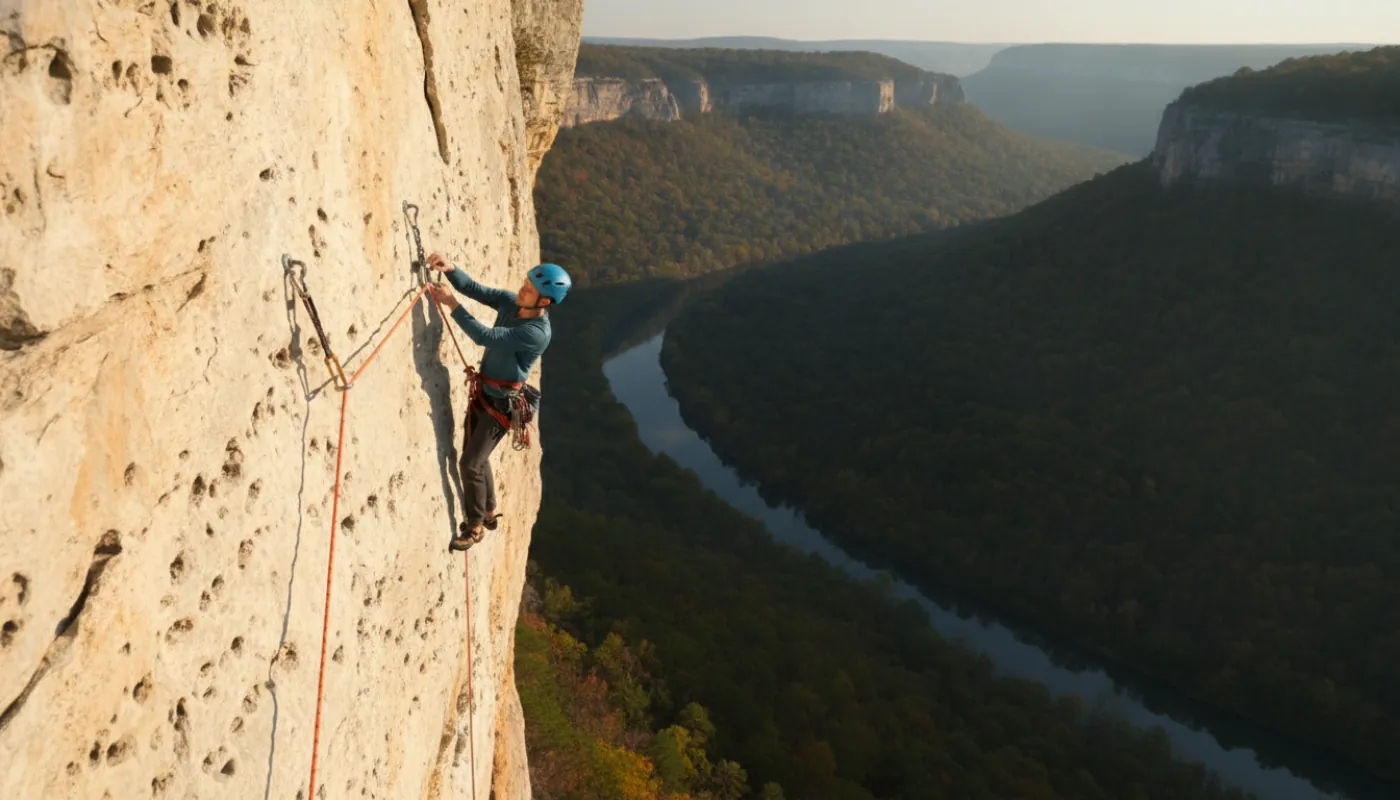
Stand where the gym told you not to. Gyms make you stand well back from the wall. Outside you generally stand close in, roughly beneath the first bolt. Standing back adds slack and drags the leader outward when they fall.
Until the first bolt is clipped, you are not a belayer, you are a spotter. A fall from ten feet before the first clip reaches the ground no matter what you do with the rope.
Give a soft catch. Real rock has ledges, corners and slabs. A hard static catch slams a falling leader into them. Learn to step in and let the rope work, and account for the weight difference between you and your partner.
And the ground itself is terrain. Talus, roots, a slope, a river. Where you stand matters, and sometimes a ground anchor isn't optional.
Falling on Lead, Honestly
Get the geometry right, because most writing on this is wrong.
You are not caught "a few feet below your last clip." You fall at least twice the distance you are above the bolt, plus slack, plus rope stretch, plus however far your belayer gets lifted. Three feet above the bolt is a six-foot fall minimum. Bolts sit five to ten feet apart, and ordinary lead falls run fifteen to twenty-five feet.
That's fine, that's the system doing its job. But you need the true picture before you take the first one, and you need to understand that low on a route, that same arithmetic puts you on the ground.
That's what a stick clip is for. Pre-clipping the first bolt deletes the ground-fall zone from the part of the climb where falling actually hurts you. It isn't cheating. It's what experienced sport climbers do.
Learn the clipping errors before you commit them: back-clipping (rope running the wrong way through the draw: it can unclip itself in a fall), Z-clipping (grabbing rope from below the previous draw), and clipping with the gate facing your direction of travel.
Wear a Helmet
Any gym-to-crag guide that doesn't mention one is not worth reading.
There is rock above you, and there are people above you, and both come down. And it isn't only rockfall: in an awkward fall, a rope catching your leg flips you upside down. Petzl's own data notes that impacts to the front, back and sides of the head happen about as often as impacts to the top.
Wear it while belaying, too. That's where the rockfall lands.
Fixed Gear Is Not Automatically Trustworthy
Your gym's bolts are inspected on a schedule by staff who are liable for them. A crag's bolts were placed by a stranger, maybe in 1987, maybe with hardware-store parts.
It is your responsibility to inspect fixed anchors every single time, not "until it becomes second nature."
Red flags you can see: quarter-inch buttonheads (pressure-fit, often not stainless: closer to a nail in the rock than an anchor), spinners, homemade or aluminium hangers, mixed metals, heavy rust. And the nastiest one: stress-corrosion cracking in coastal and salt-air environments, where a bolt can look perfect and be worthless.
Which leads to the uncomfortable rule underneath all of it: you cannot fully verify a bolt by looking at it. Back it up where you can. Back off where you can't.
Top-Roping Outside Has Its Own Trap
"There are chains up there, so top-roping is easy" is how people get hurt.
Do not run your top-rope directly through the fixed hardware. Top-roping should run through your own removable gear (carabiners on quickdraws, runners, a cordelette), not through the fixed rings. A loaded, moving rope saws through anchor hardware and wears it out for everyone behind you.
And the walk to the cliff top to rig it is a serious, unroped, exposed job that has killed people. Treat the top of the cliff as terrain, not as a shortcut.
A Few More Illusions to Drop
Gym mats are not a safety net. Gym flooring is tested for impact attenuation, it is not "rated" to make a fall from the top of the wall safe. Bouldering ground falls are a leading source of gym injury: ankles, tibias, spines. If you've been carrying the belief that the mat makes falling consequence-free, drop it before you get on a real boulder with real ground under it.
Slabs are more dangerous than they look, not less. You don't fall cleanly on a slab, you slide and tumble down the rock. Abrasion and broken ankles, not clean air.
Grades outside are not gym grades. Start two to three number grades below your gym level and expect it to feel hard. That's normal, and it isn't a verdict on you.
Do a partner check, out loud, every time. Knot. Buckle. Device. Locker locked. System closed.
Don't Wreck the Place
You're now a guest in an access agreement somebody else fought for.
Brush off your tick marks. Keep chalk reasonable. Stay on the trail, including the annoying one. Respect seasonal raptor closures, they're a large part of how crags stay open. Pack out everything, tape and fruit peel included.
Crags close. Climbers close them.
What to Do Next
- Take a gym-to-crag course, or hire an AMGA-certified guide for a day. It is the highest-value money in your climbing life.
- Find a mentor, an experienced outdoor climber who'll let you watch and ask stupid questions.
- Practise anchor cleaning on the ground until you could do it tired, cold and slightly frightened. Because one day you will be.
- Then go climb something well inside your ability. Close the system. Wear the helmet. Have the lowering conversation before you leave the ground.
The gym made you strong. It didn't make you safe. Those are two different projects, and the second is the one that buys you a long career.